
Introduction
Construction in the USA moves fast. Clients expect speed, accuracy, and lower costs. Traditional construction methods often struggle to meet these demands. Delays, design conflicts, and budget issues remain common problems on many projects.
Prefabrication has become a strong solution to these challenges. Many contractors now build components in factories before sending them to the site. This approach saves time and reduces waste. It also improves quality because work happens in a controlled environment.
Yet prefabrication brings its own challenges. Teams must coordinate designs before fabrication begins. A small design mistake can cause major delays once components reach the site. Fixes at that stage can be expensive.
This is where BIM services help construction teams. BIM creates a detailed digital model before physical work starts. Teams can review every element of the project in advance. Architects, engineers, and contractors work from the same information.
Think of a contractor in Texas who plans a large hospital project. Prefabricated walls, MEP modules, and structural parts arrive from different suppliers. Without proper coordination, installation becomes difficult. BIM helps teams detect problems early and plan each step clearly.
Because of this, many construction firms across the USA now rely on BIM for prefabrication projects. It brings clarity, improves coordination, and supports faster project delivery.
Current Situation of Prefabrication Construction in the USA
Prefabrication construction is no longer a niche idea in the United States. Many contractors now adopt modular and off-site building methods to deliver projects faster and reduce site risks. Housing demand, labor shortages, and tight project schedules push builders toward this approach.
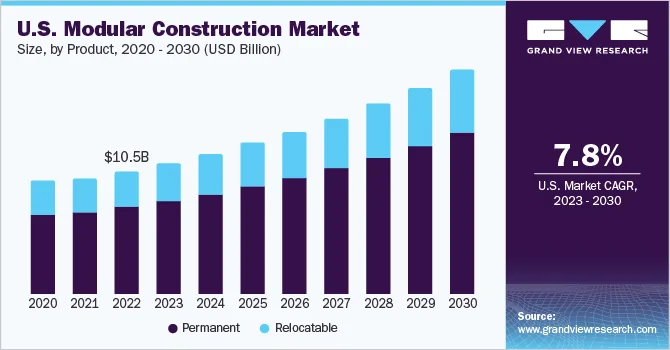
The market shows clear growth. The U.S. modular construction market reached about $10.53 billion in 2022 and continues to expand as more developers adopt prefabrication methods.
Industry reports also expect the market to reach around $19.17 billion by 2030, with steady annual growth close to 7.8%.
Factory-built construction helps teams maintain quality and reduce errors. It also allows work to move forward even when skilled labor is limited on job sites. These advantages make prefabrication attractive for housing, healthcare, and commercial projects.
As adoption increases, digital tools such as BIM become essential. Contractors need precise models to coordinate designs before manufacturing begins. Without digital coordination, prefabrication projects face higher risk during assembly on site.
| Growth of Prefabrication | |
| Year | Market Size (USD) |
| 2022 | $10.53 Billion |
| 2025 | $12.93 Billion |
| 2030 | $19.17 Billion (Projected) |
| 2033 | $24.86 Billion (Projected) |
What is Prefabrication in Construction
Prefabrication is a construction method where building parts are made away from the project site. Workers build these parts in a factory and then transport them to the site for assembly.
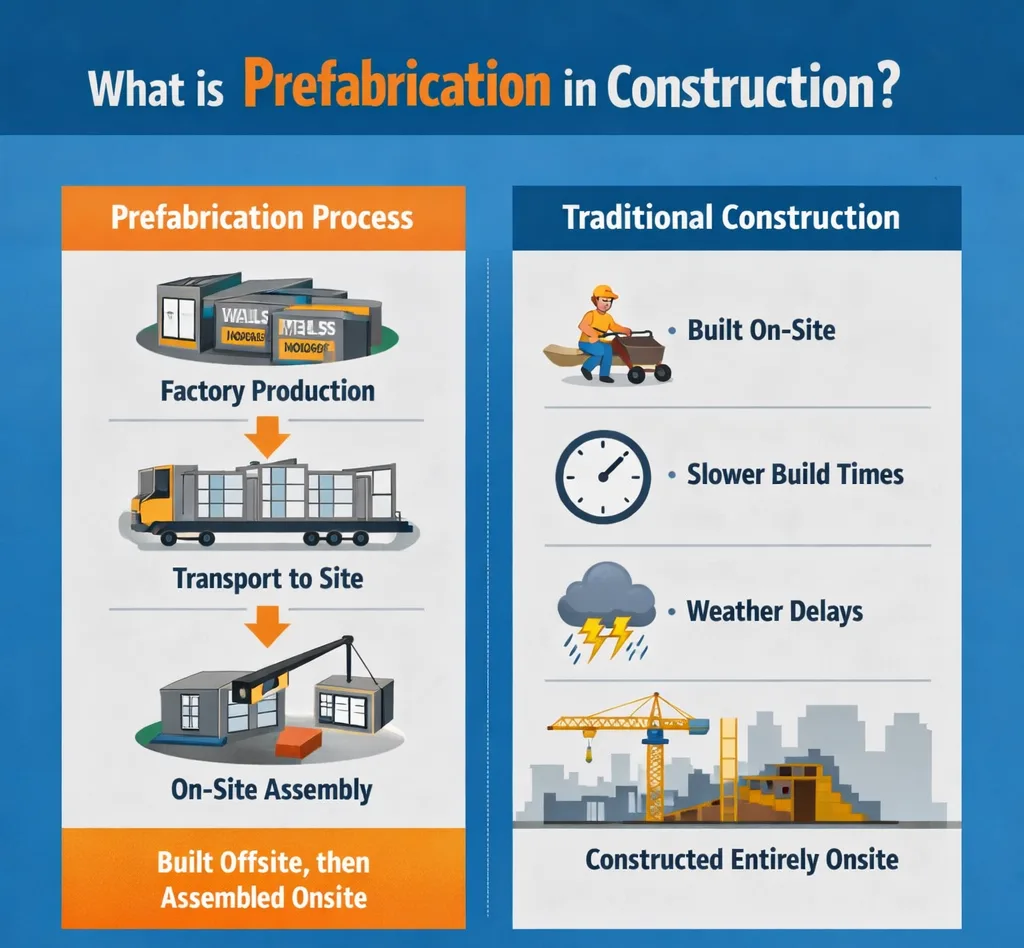
These parts may include walls, floors, bathroom pods, steel frames, or MEP modules. Each component arrives ready for installation. This method reduces the amount of work needed at the construction site.
In traditional construction, most work happens on site. Teams build structures step by step. Weather, labor shortages, and site conditions often slow the process. Prefabrication avoids many of these issues because production takes place in a controlled environment.
For example, a contractor in California may build apartment units using modular walls and bathroom pods. The factory prepares these units while the site team completes the foundation. Once the modules arrive, crews install them quickly.
This process saves time and improves quality. Factory production allows better supervision and consistent standards. Contractors also reduce material waste and improve worker safety.
However, prefabrication requires precise planning. Every component must fit perfectly during installation. This is why BIM services play a major role in modern prefabrication projects across the USA.
How BIM Supports Prefabrication Construction
Prefabrication needs careful planning. Every component must match the design before it leaves the factory. BIM helps teams achieve this level of accuracy.
BIM creates a detailed digital model of the building. This model shows structure, architecture, and MEP systems in one place. Teams review the model before fabrication begins.
This process helps architects, engineers, and contractors work from the same data. Each team can see how their work connects with others. This reduces confusion and design gaps.
For example, a contractor in New York may plan prefabricated MEP racks for a hospital project. BIM helps engineers check pipe routes, duct paths, and cable trays before production. The factory then builds racks based on the approved model.
BIM also supports better coordination with fabricators. Manufacturers can extract accurate dimensions directly from the model. This reduces the risk of incorrect components.
The result is smoother installation on site. Workers place components with fewer adjustments. This saves time and avoids costly delays during construction.
Key Benefits of Using BIM for Prefabrication
BIM brings several advantages to prefabrication projects. It improves planning, accuracy, and collaboration across the construction team.
Better Design Accuracy
BIM models provide precise dimensions for each component. Fabricators can produce parts with greater confidence.
Improved Coordination
All project teams work on a shared digital model. This helps them detect conflicts early in the design phase.
Faster Project Delivery
Prefabricated components arrive ready for installation. BIM planning allows faster assembly on site.
Reduced Construction Errors
Design conflicts become visible during model reviews. Teams fix issues before fabrication starts.
Cost Control
Early problem detection prevents expensive rework. This helps contractors maintain project budgets.
Higher Quality Output
Factory production combined with BIM guidance leads to consistent results. Each component meets design requirements.
These benefits explain why many construction firms in the USA rely on BIM services to support modern prefabrication projects.
Challenges in Prefabrication Without BIM
Prefabrication depends on precision. Each component must fit perfectly during installation. Without BIM, this level of accuracy becomes difficult.
Design teams often work with separate drawings. Architects, engineers, and contractors may rely on different versions of project files. This creates confusion and coordination gaps. These issues also reflect some of the challenges of implementing BIM, especially when teams lack proper workflows and coordination practices.
Small design mistakes can lead to large problems. A pipe route or wall dimension may not match the fabricated component. When the part arrives on site, workers must stop and fix the issue.
These delays affect project schedules. Contractors may need to reorder parts or adjust components at the site. Both options increase project costs.
Communication also becomes harder without a shared digital model. Teams depend on emails, drawings, and manual updates. Important details can easily get missed.
Fabricators also face challenges. Without accurate 3D models, they rely on 2D drawings for production. This increases the risk of incorrect measurements.
As prefabrication grows in the USA, projects require stronger coordination tools. BIM helps reduce these risks by giving teams a clear digital reference before fabrication begins.

Future of Prefabrication Construction with BIM in the USA
Prefabrication continues to gain attention across the U.S. construction industry. Builders look for ways to deliver projects faster and reduce costs.
BIM will play a major role in this shift. Contractors now use digital models to plan projects before physical work starts. This approach helps teams avoid errors and manage complex designs.
Technology will also improve factory production. Fabricators can connect BIM models with automated machines and manufacturing tools. This allows precise production of building components.
Large projects already use this approach. Hospitals, residential towers, and commercial buildings often rely on prefabricated modules supported by BIM models.
The demand for skilled BIM teams will also grow. Construction companies need experts who can create accurate models for fabrication and installation.
Many firms across the USA now see BIM as a key part of modern construction. As prefabrication expands, BIM will help teams plan better, coordinate faster, and deliver projects with greater confidence.
Conclusion
However, prefabrication requires strong planning and coordination. Every wall, pipe module, or structural component must match the design. Even a small mistake can cause delays during installation. This is where BIM services make a major difference.
BIM allows teams to create a detailed digital model before construction begins. Architects, engineers, contractors, and fabricators can review the same model. This shared view helps detect conflicts early. Teams solve design issues before fabrication starts. As a result, projects move faster and avoid costly rework.
Many construction firms in the United States now rely on BIM to support prefabrication workflows. The combination of digital planning and factory production improves efficiency across the project lifecycle.
Next Synergy Solution supports this transformation through professional BIM services. The company helps construction teams create accurate models, coordinate project data, and prepare designs for prefabrication. With the right BIM support, builders can plan with confidence and deliver projects with greater precision and speed.