
Introduction
John runs a mid-sized construction firm in Texas. He handles tight deadlines and rising costs every day. One missed detail can shake the whole project. Last year, his team faced a costly delay. A pipe clashed with a beam. They found it late, on site. Work stopped. Labor costs rose. Stress followed.
Stories like John’s are common across the US. Many contractors still rely on 2D plans and guesswork. These methods leave room for errors. Small issues grow into big expenses. Teams fix problems after they appear, not before.
This is where BIM makes a difference. It helps spot clashes early. It gives clear project views. Yet, many firms avoid it due to cost myths.
What they miss are the hidden costs. These costs stay unseen at first but hit hard later. This blog breaks down five such costs contractors often face without BIM, and why bim for General Contractors is becoming essential to avoid these challenges.
What Are Hidden Costs in Construction?
Hidden costs are expenses you do not plan at the start. They show up later and disturb your budget. These costs often come from mistakes, delays, or poor planning. You may not see them in early estimates, but you feel them during execution.
In many projects, teams still depend on 2D drawings and manual checks. These methods miss small details. A minor error in design can lead to rework on-site. That means extra labor, more material use, and lost time. These are hidden costs.
Traditional workflows also split teams. Architects, engineers, and contractors work in silos. They share updates late or miss key details. This gap leads to confusion and errors. By the time teams spot the issue, the cost has already increased. Many firms now turn to leading BIM services providers in the USA to overcome these gaps and improve coordination.
Lack of coordination adds more risk. When systems do not align, clashes happen. Poor visibility makes it hard to track changes or predict problems. Teams react after issues arise, not before.
Hidden costs grow quietly in such conditions. They reduce profit and slow down project delivery without clear warning signs.
Costly Rework and Design Errors
How Design Clashes Lead to Rework
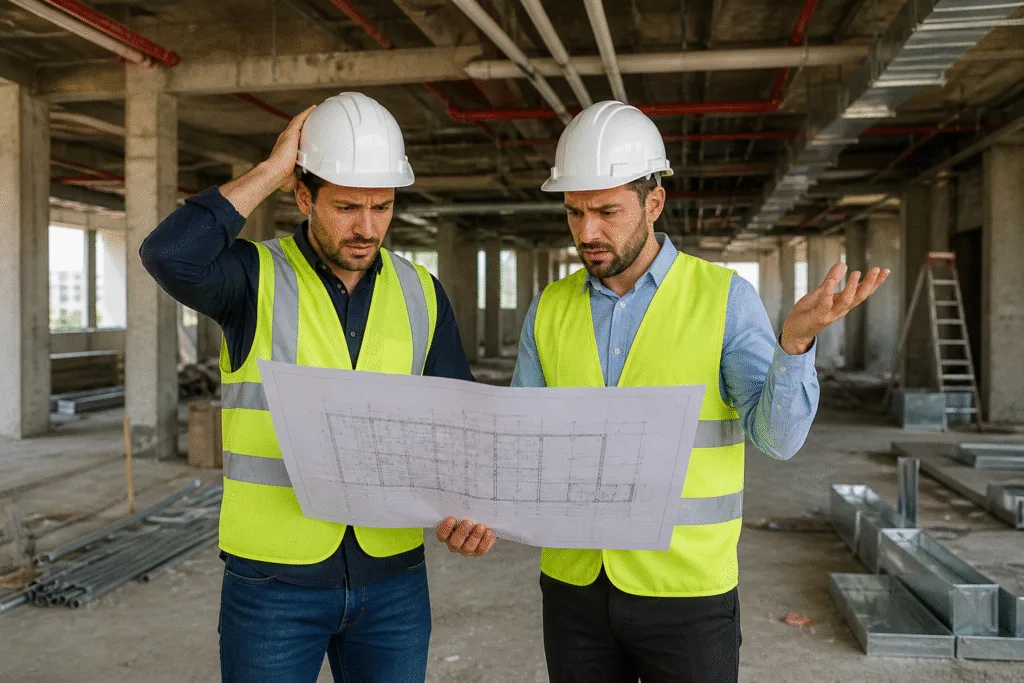
Design clashes happen when two systems overlap in the same space. A duct may pass through a beam. A pipe may block an electrical path. These errors often stay hidden in 2D drawings. Teams notice them only during construction. At that stage, fixes take more time and effort. Workers must stop, adjust, and redo parts of the work.
Impact on Labor, Materials, and Timelines
Rework increases labor hours fast. Crews spend time fixing errors instead of making progress. Material waste also rises. Removed parts cannot always be reused. This adds extra purchase cost. Delays then affect the full schedule. One small clash can push the project timeline by days or even weeks.
Real-World Scenario
Imagine a site where plumbing lines clash with structural beams. The team finds this after installation starts. They cut and reroute pipes. This leads to delay, added cost, and client stress.
How BIM Helps
BIM detects clashes before construction starts. It shows a clear 3D view of all systems. Teams fix issues early and avoid costly rework on-site.
Poor Project Coordination and Communication Gaps
Lack of Team Alignment
Construction projects involve many stakeholders. Architects, engineers, and contractors must stay in sync. In traditional workflows, each team works on separate files. Updates do not reach everyone on time. This creates gaps in understanding. One team may follow an old plan while another uses a new one.
Impact on Project Flow
Poor coordination leads to confusion on-site. Workers may install elements in the wrong place. Changes come late and disrupt progress. This results in delays and extra effort. Teams spend time on calls, emails, and fixes instead of actual work. Miscommunication also increases the risk of errors and safety issues.
Real-World Scenario
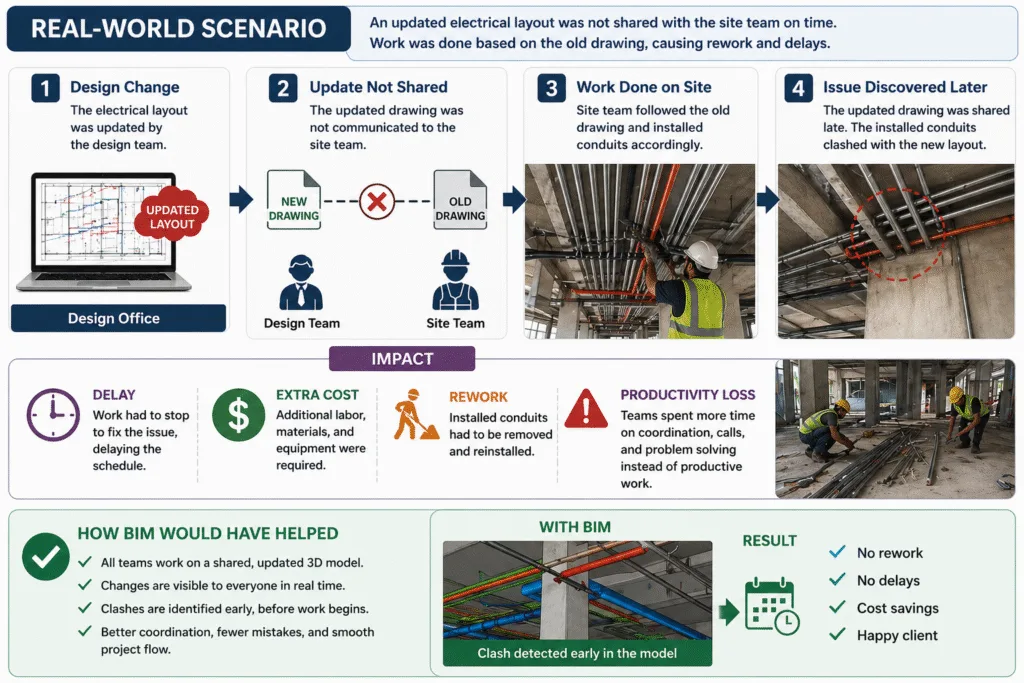
A contractor receives an updated drawing after work has started. The electrical layout has changed, but the site team follows the old version. They install conduits based on outdated plans. Later, they remove and redo the work. This wastes time, labor, and materials.
How BIM Improves Coordination
BIM creates a shared model for all teams. Everyone works on the same updated data. It improves communication and keeps teams aligned. Clear visibility helps avoid confusion and reduces costly mistakes.
Inaccurate Quantity Takeoffs and Budget Overruns
Errors in Quantity Estimation
Accurate quantity takeoff is key to project success. Many teams still rely on manual methods and 2D drawings. These methods leave room for human error. A small miscalculation can change the full estimate. Missing items or wrong quantities often go unnoticed at the start. With advanced 5D BIM cost estimation services, construction teams can improve accuracy, reduce manual errors, and gain better control over project budgets from the early planning stage.
Impact on Budget and Planning
When quantities are not correct, budgets fail to stay on track. Contractors may order less material and face shortages on site. This stops work and causes delays. In other cases, they order more than needed. This leads to waste and extra cost. Both cases hurt profit and reduce cost control.
Real-World Scenario
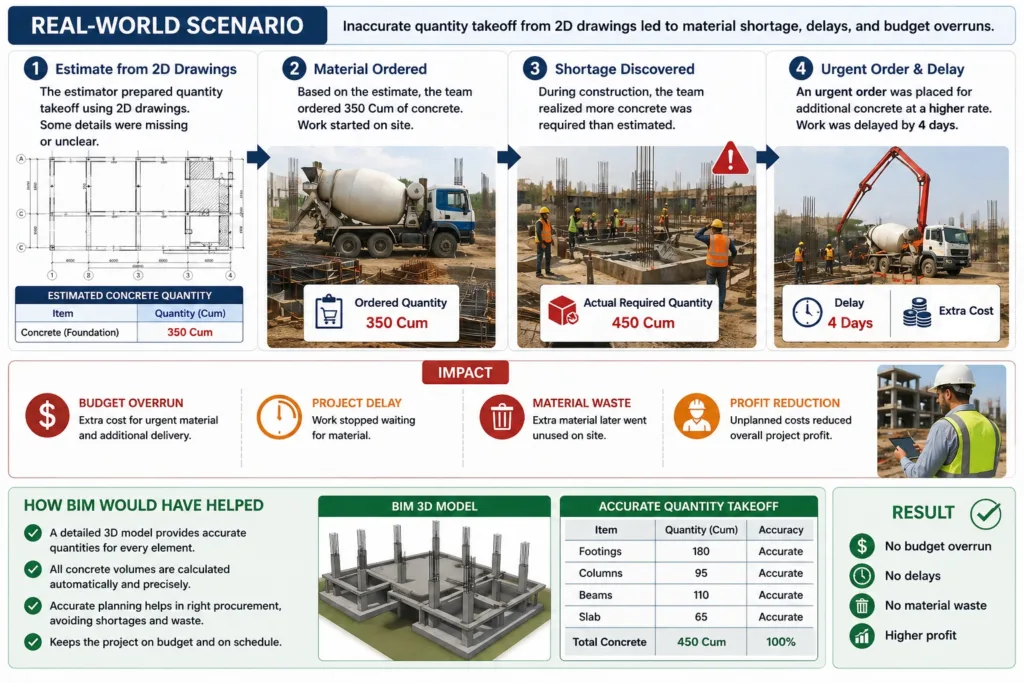
A contractor estimates concrete volume from 2D plans. Some structural details are not clear in the drawings. The team orders less concrete than required. Work stops mid-process. They place urgent orders at higher rates. This increases cost and affects the schedule.
How BIM Improves Accuracy
BIM uses a detailed 3D model to calculate quantities. It gives exact material data for each element. Teams get clear and reliable estimates before work starts. This helps control budget, reduce waste, and avoid sudden cost increases.
Project Delays and Schedule Conflicts
Causes of Delays
Project delays often start with small issues. Late design updates, missing data, or poor planning can slow progress. When teams do not align, tasks overlap or get missed. A delay in one trade affects the next. This creates a chain reaction across the project.
Impact on Timeline and Cost
Delays extend the project schedule. Labor stays on site longer than planned. Equipment and resources remain in use. This adds extra cost each day. Clients may also face loss due to late delivery. In some cases, penalties apply for missed deadlines. These factors reduce profit and create stress for all teams.
Real-World Scenario
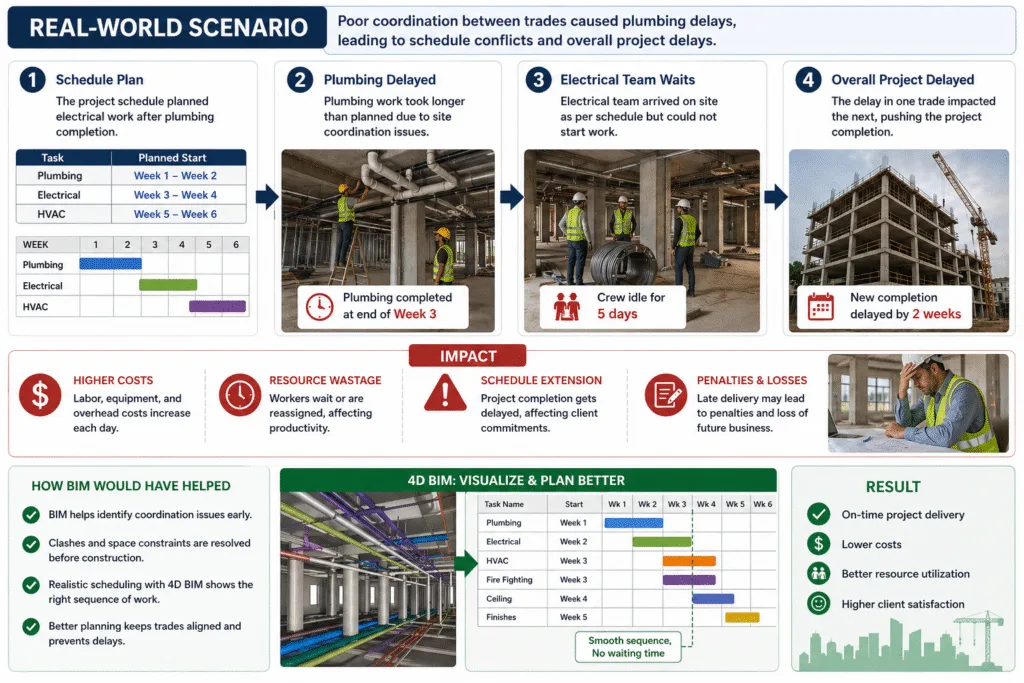
A project schedule plans electrical work after plumbing. Due to poor coordination, plumbing work runs late. The electrical team arrives but cannot start. Workers wait or leave the site. This disrupts the full timeline. Later, teams rush to recover lost time, which leads to more errors.
How BIM Helps Manage Time
BIM links design with scheduling. It allows teams to plan tasks in a clear sequence. Everyone sees when and where work will happen. This reduces conflicts between trades. Early planning helps avoid delays and keeps the project on track.
Inefficient Facility Management and Lifecycle Costs
Lack of Accurate Building Data
Facility management starts after construction ends. Many teams depend on paper drawings or outdated files. These records often miss key details. Over time, changes on the site do not get updated. This creates confusion during maintenance and repair work.
Impact on Long-Term Costs
Poor data leads to slow decision-making. Maintenance teams spend more time finding system details. Small issues take longer to fix. This increases labor cost and downtime. Equipment may not get proper care, which reduces its life. Unexpected breakdowns then add more expense. These costs build up over the years and affect the full lifecycle budget.
Real-World Scenario
A facility team needs to repair an HVAC unit. They cannot find the exact layout or system path. Staff spend hours tracing connections. In some cases, they open the wrong sections and cause damage. This delays the repair and increases the cost.
How BIM Supports Facility Management
BIM provides a detailed digital model of the building. It stores all system data in one place. Teams can access accurate information at any time. This helps plan maintenance, reduce downtime, and control long-term costs.

Why US Contractors Are Shifting Toward BIM
Need for Better Control and Accuracy
US contractors face tight budgets and strict timelines. Small errors can lead to big losses. BIM helps reduce these risks. It gives a clear 3D view of the project. Teams can spot issues early and fix them before work starts. This improves accuracy and saves time on site.
Demand for Cost and Time Efficiency
Clients now expect faster delivery and better cost control. Traditional methods struggle to meet these demands. BIM supports better planning and scheduling. It helps teams manage resources in a smart way. This leads to fewer delays and controlled project costs.
Improved Collaboration Across Teams
Modern projects involve many teams working together. BIM creates a shared platform where everyone stays updated. It reduces confusion and improves communication. Teams can work with real-time data, which helps avoid mistakes and rework.
Overcoming Old Challenges
Many contractors once avoided BIM due to cost and training needs. These were real Challenges of implementing BIM. But now, firms see long-term value over short-term cost. They understand that early investment brings better returns.
Choosing the Right Partner
Success with BIM also depends on the right support. Contractors now focus on how they Choose BIM Services Provider. A skilled partner helps with smooth adoption, better workflows, and strong project outcomes.
Conclusion
Hidden costs in construction do not appear at the start, but they affect the project in many ways. Rework, delays, poor coordination, and wrong estimates reduce profit and slow progress. Many US contractors have faced these issues at some point. The shift toward BIM is not just a trend. It is a smart move to avoid these hidden losses. BIM brings clarity, better planning, and strong team alignment. It helps projects stay on time and within budget.
At this stage, the right support also matters. This is where Next Synergy Solution steps in. The company offers reliable BIM services for contractors across the USA. Their team focuses on accuracy, coordination, and practical results. From clash detection to detailed modeling, they help reduce risks before construction starts.
If you want to avoid hidden costs and improve project performance, working with an experienced BIM partner can make a real difference.
This helps plan maintenance, reduce downtime, and control long-term costs.