
Introduction
Building Information Modeling (BIM) is no longer a new concept in the USA. Most large construction projects now rely on BIM to improve coordination, reduce errors, and support better project delivery.
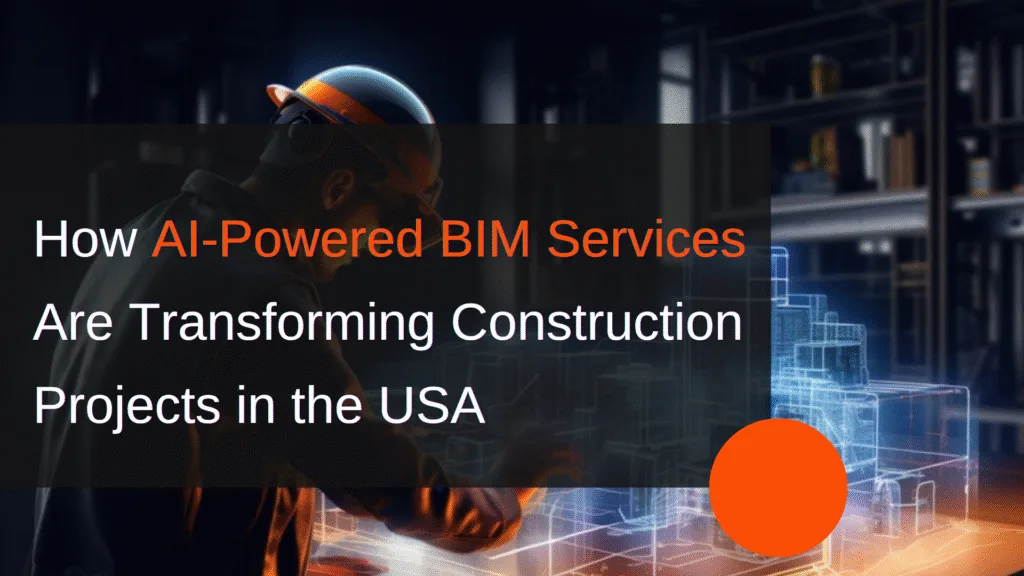
What has changed in recent years is the rise of Artificial Intelligence (AI) within BIM workflows. AI now helps project teams review models, identify design conflicts, analyze project data, and support faster decisions.
This shift comes at a time when construction firms face tighter budgets, labor shortages, and higher client expectations. Owners want more than a 3D model. They want accurate data, better forecasts, and fewer surprises during construction.
As someone who works closely with BIM projects, I see AI as the next major step in digital construction. It does not replace BIM professionals. It helps them work faster and focus on tasks that require experience and judgment.
The Current State of BIM Adoption in the USA
BIM has become a standard practice across many sectors in the United States. Healthcare facilities, commercial buildings, industrial plants, and infrastructure projects now use BIM throughout design and construction phases.
The industry has also moved beyond basic 3D modeling. Many firms now use BIM for clash detection, quantity takeoffs, project coordination, and facility management. This wider use reflects the growing demand for better project control and higher accuracy.
Another major change is the move toward connected cloud platforms. In 2026, Autodesk combined Autodesk Construction Cloud with Autodesk Forma. The goal is to create a single environment that connects planning, design, construction, and operations. This shows where the industry is heading—toward more connected and data-driven project delivery.
AI has also become part of this transformation. Autodesk recently announced new AI capabilities that support design reviews, project analysis, and model-based decision-making. These tools help teams identify issues earlier and reduce manual work.
The result is clear. BIM in the USA is no longer just a design tool. It has become a project intelligence platform that supports decisions from early planning through building operations. Firms that combine BIM with AI are now better positioned to improve efficiency, reduce rework, and deliver projects with greater confidence.

What Is AI-Powered BIM?
AI-powered BIM combines Building Information Modeling with Artificial Intelligence. It helps project teams analyze large amounts of project data and complete tasks with greater speed and accuracy.
Traditional BIM services rely heavily on manual reviews and human input. AI adds a layer of intelligence to the process. It can identify patterns, detect issues, and provide recommendations based on project data.
Instead of spending hours on repetitive tasks, teams can use AI tools to focus on planning, coordination, and problem-solving. This approach helps improve project performance from design through construction.
Key Applications of AI in BIM Services
Automated Clash Detection and Design Validation
Clash detection is one of the most common BIM uses. AI takes this process further by identifying conflicts faster and with greater accuracy.
It can review architectural, structural, and MEP models at the same time. This helps teams resolve issues before construction starts.
Predictive Risk Analysis
Construction projects often face schedule delays and budget challenges. AI can analyze project data and highlight potential risks early.
Project teams can use these insights to make informed decisions and avoid costly disruptions.
Automated Quantity Takeoff and Cost Estimation
Accurate material estimates play a major role in project success. AI can extract quantities from BIM models and support more reliable cost calculations.
This reduces manual effort and improves budget planning.
Construction Schedule Optimization
AI helps project teams evaluate schedules and identify areas that may cause delays.
It can recommend adjustments based on project data, resource availability, and previous project outcomes.
Generative Design Support
AI can create multiple design options based on project requirements.
Teams can compare these options and select solutions that best meet cost, space, and performance goals.
How AI-Powered BIM Improves Construction Project Outcomes
Reduced Design Errors
AI helps detect conflicts and inconsistencies early in the design phase.
This reduces the chance of errors that may lead to rework during construction.
Faster Project Delivery
Many BIM tasks require significant time and effort. AI automates several of these processes.
As a result, teams can complete reviews and approvals more quickly.
Better Cost Control
Accurate estimates and early risk identification support stronger budget management.
Project teams gain better visibility into potential cost impacts before they become major issues.
Improved Decision-Making
AI provides valuable insights from project data.
Owners, designers, and contractors can make decisions based on facts rather than assumptions.
Higher Construction Quality
Better coordination leads to better project execution.
When teams work from accurate and validated BIM models, they can achieve higher quality outcomes with fewer field issues.
Industries Driving AI-Powered BIM Adoption in the USA
Healthcare Construction
Healthcare projects require precise coordination between architectural, structural, and MEP systems. A small design error can lead to costly changes later.
Read More: How BIM Helps Reduce Construction Errors in US Healthcare Projects https://www.nxtsyg.com/blog/how-bim-helps-reduce-design-and-construction-errors-in-us-healthcare-projects/
Commercial Construction
Commercial developments often involve large teams, tight schedules, and complex design requirements.
AI supports faster design reviews, cost analysis, and project coordination. This helps developers and contractors deliver projects with greater confidence.
Industrial Facilities
Industrial projects contain large amounts of equipment, piping, and utility systems.
AI helps manage complex BIM data and supports better planning before construction starts. This reduces project risks and improves execution quality.
Infrastructure Projects
Transportation, utility, and public infrastructure projects generate large volumes of data.
AI helps teams analyze this information and identify potential challenges early. This supports better project planning and long-term asset management.
Challenges in Implementing AI-Powered BIM
Data Quality Issues
AI relies on accurate project data. Poor model quality can affect the reliability of AI-generated insights.
Organizations must establish strong BIM standards before they can fully benefit from AI tools.
Software Integration
Many BIM service providers in the USA are using different software platforms across departments.
Connecting BIM, project management, and AI systems can require additional effort and planning.
Workforce Readiness
AI tools continue to evolve. Teams need proper training to use these technologies effectively.
Companies that invest in skill development often see better results from AI adoption.
Initial Investment
New technology requires investment in the best software for BIM, infrastructure, and training.
Some firms hesitate because of upfront costs. However, many organizations view AI as a long-term investment that can reduce project expenses over time.
Data Security Concerns
Construction projects contain valuable information.
Companies must protect project data and establish secure workflows when using cloud-based AI platforms.
How Next Synergy Solution Supports AI-Driven BIM Projects
As AI continues to reshape BIM workflows, project teams need reliable BIM data and accurate models. AI can only deliver strong results when the underlying BIM model is well structured.
Next Synergy Solution supports this foundation through professional BIM services for architects, engineers, contractors, and project owners.
Our team provides BIM modeling, MEP BIM services, clash detection services, Scan to BIM, construction documentation, and coordination support for projects across multiple sectors.
We focus on model accuracy, project coordination, and data consistency. These elements help create BIM environments that align with modern AI-driven workflows.
Whether a project involves healthcare facilities, commercial developments, industrial plants, or infrastructure assets, our BIM expertise helps teams improve efficiency and reduce project risks.
Conclusion
AI-powered BIM is changing how construction projects move from concept to completion.
Project teams can identify issues earlier, improve cost control, strengthen coordination, and make faster decisions with reliable project data.
The construction industry in the USA continues to invest in AI because the benefits extend far beyond design. AI helps support better outcomes across the entire project lifecycle.
As technology advances, the connection between AI and BIM will become even stronger. Companies that adopt these tools today will be better prepared for the future of construction.
Success, however, still depends on accurate BIM models and experienced project support. With the right BIM partner and the right technology strategy, organizations can unlock greater value from every project.