
Introduction
The USA construction industry continues to move toward digital project delivery. Owners, architects, engineers, and contractors now depend on accurate building data to make better decisions and reduce project risks.
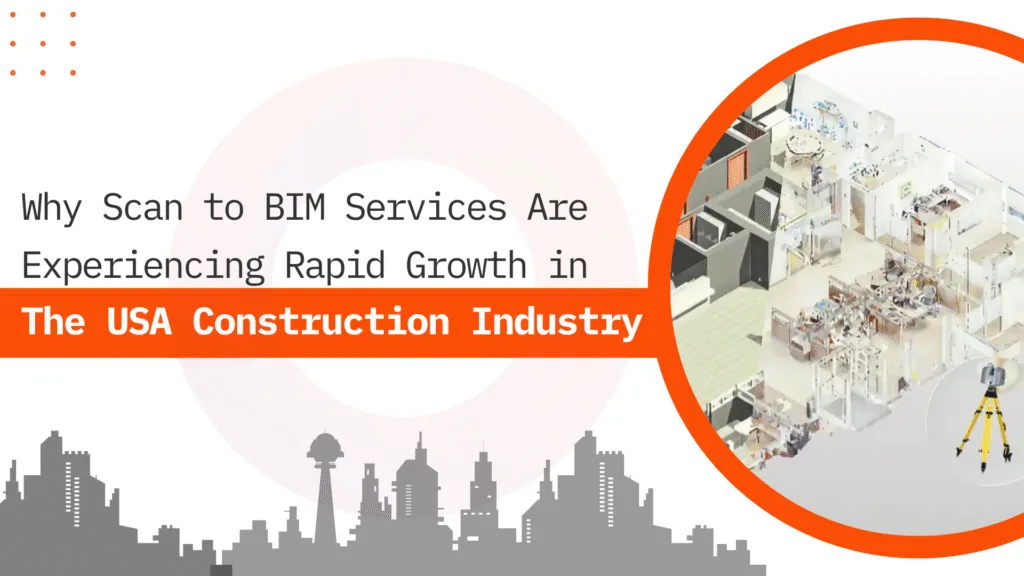
This shift has created strong demand for Scan to BIM services. These services convert laser scan data into intelligent BIM models that reflect actual site conditions. Instead of relying on outdated drawings, project teams can work with precise digital representations of existing buildings.
The need for accurate building information has become even more important as renovation and retrofit projects increase across the country. Many facilities were built decades ago and lack reliable documentation. Scan to BIM helps bridge this gap by providing detailed and accurate models before design or construction begins.
At the same time, digital twins, facility management systems, and advanced BIM workflows continue to gain popularity. All of these technologies rely on accurate building data. As a result, Scan to BIM has become an essential part of modern construction projects.
The Current State of Scan to BIM Adoption in the USA
Scan to BIM adoption has grown rapidly across multiple sectors, including healthcare, commercial construction, industrial facilities, educational institutions, and public infrastructure.
One major factor behind this growth is the increase in renovation and adaptive reuse projects. According to the latest market reports, spending on renovation projects remains strong as owners upgrade existing buildings rather than construct new facilities from scratch.
The rise of digital twin technology has also accelerated demand for reality capture and Scan to BIM services. Building owners now seek accurate digital models to support operations, maintenance, and asset management throughout a facility’s lifecycle.
Many architecture, engineering, and construction firms have also adopted laser scanning technology to improve project accuracy. Accurate site data helps reduce design conflicts, minimize rework, and support better coordination between project stakeholders.
As the industry places greater emphasis on efficiency and risk reduction, Scan to BIM continues to move from a specialized service to a standard project requirement.
What Is Scan to BIM?
Scan to BIM is the process of converting laser scan data into a Building Information Model.
The process begins with laser scanners that capture millions of measurement points from an existing structure. This data creates a point cloud, which serves as a highly accurate digital record of the building.
BIM specialists then use the point cloud to develop architectural, structural, and MEP models. These models represent actual building conditions with a high level of accuracy.
Project teams use these models for renovation planning, design coordination, clash detection, construction documentation, facility management, and digital twin development.
By providing reliable existing-condition data, Scan to BIM helps construction professionals make informed decisions and reduce costly project surprises.
Why Demand for Scan to BIM Services Is Growing in the USA
Aging Building Infrastructure
Many buildings across the USA were built decades ago. Original drawings are often missing, outdated, or inaccurate.
Before renovation work begins, project teams need reliable information about existing conditions. Scan to BIM provides accurate digital models that support better planning and execution.
Increased Focus on Construction Accuracy
Construction professionals face growing pressure to reduce errors, delays, and rework.
Accurate BIM models derived from laser scans help teams make informed decisions from the start. This is one reason why demand for the Best Scan to BIM Company in the USA continues to grow across multiple industries.
Growth in Renovation and Retrofit Projects
Renovation projects continue to rise as property owners upgrade existing facilities instead of constructing new buildings.
Accurate site data helps architects and engineers avoid costly surprises during design and construction. This has made Scan to BIM a preferred solution for renovation projects.
Expansion of Healthcare Facility Upgrades
Hospitals and healthcare facilities require continuous upgrades to meet new operational and patient care requirements.
Scan to BIM helps project teams capture precise building conditions without disrupting daily operations. This supports efficient planning and coordination.
Rising Adoption of Digital Twins
Building owners now seek smarter ways to manage facilities throughout their lifecycle.
Digital twins require accurate building data as a foundation. Scan to BIM creates detailed models that support asset tracking, maintenance planning, and operational management.
Key Benefits of Scan to BIM Services
Improved Project Accuracy
Laser scanning captures existing site conditions with a high level of precision.
This reduces errors that often occur when teams rely on manual measurements or outdated drawings.
Reduced Rework During Construction
An accurate BIM modeling service helps identify potential issues before construction begins.
Fewer surprises on-site lead to less rework and smoother project execution.
Faster Project Planning
Project teams gain access to reliable building information early in the process.
This allows architects, engineers, and contractors to move forward with greater confidence.
Better Cost Control
Accurate data supports more reliable estimates and budgeting.
Project owners can reduce unexpected expenses caused by inaccurate documentation.
Enhanced Collaboration
A shared BIM model creates a common source of information for all project stakeholders.
This improves communication and coordination throughout the project lifecycle.
How Scan to BIM Supports Digital Construction Workflows
BIM Coordination and Clash Detection
Accurate Scan to BIM models improve coordination between architectural, structural, and MEP disciplines.
Teams can identify conflicts before construction begins.
Renovation Planning
Design teams need a clear understanding of existing conditions before developing renovation strategies.
Scan to BIM provides the information needed to create accurate designs.
Facility Management
Building owners use BIM models to manage assets, maintenance schedules, and operational data.
This improves long-term facility performance.
Asset Documentation
Digital records help owners maintain accurate information about building components and systems.
This simplifies future renovations and maintenance activities.
Digital Twin Development
Digital twins depend on accurate building geometry and asset information.
Scan to BIM provides the foundation for digital twin platforms that support smarter building management and data-driven decision-making.
Challenges Organizations Face Without Scan to BIM
Inaccurate Existing Drawings
Many older buildings have outdated or incomplete drawings. In some cases, documentation may not exist at all.
Project teams that rely on inaccurate information often encounter unexpected issues during design and construction.
Missing Building Information
Traditional drawings rarely capture every detail of a building.
Missing information about structural elements, MEP systems, or site conditions can lead to costly project delays and design revisions.
Unexpected Site Conditions
Without accurate building data, teams may discover conflicts only after construction begins.
These surprises often result in schedule disruptions, change orders, and additional expenses.
Increased Project Delays
Design teams need reliable information before project planning can move forward.
When building data is inaccurate, approvals, coordination, and construction activities can take longer than expected.
Higher Construction Costs
Errors caused by inaccurate measurements and incomplete documentation can increase labor costs and material waste.
Accurate Scan to BIM models help reduce these risks before they impact the project budget.
What to Look for in a Scan to BIM Service Provider in the USA
Experience with Complex Projects
A qualified provider should have experience across multiple sectors, including healthcare, commercial, industrial, and infrastructure projects.
Industry knowledge helps ensure accurate and practical BIM deliverables.
Strong Quality Control Standards
Accuracy is one of the most important factors in Scan to BIM projects.
Look for a company that follows strict quality checks throughout the modeling process.
Expertise in BIM Software Platforms
The provider should have experience with leading BIM platforms such as Autodesk Revit and other industry-standard tools.
This ensures compatibility with project requirements.
Understanding of Construction Workflows
A Scan to BIM model should support design, coordination, construction, and facility management goals.
Choose a provider that understands how BIM data will be used throughout the project lifecycle.
Customized BIM Deliverables
Every project has unique requirements.
A reliable Scan to BIM company should provide models based on the level of detail, level of development, and project objectives required by the client.
How Next Synergy Solution Supports Scan to BIM Projects
Next Synergy Solution provides professional Scan to BIM services for architects, engineers, contractors, facility managers, and building owners across the USA.
Our team converts laser scan data and point clouds into highly accurate BIM models that support renovation, retrofit, facility management, and construction projects.
We provide architectural BIM modeling, structural BIM modeling, MEP BIM modeling, as-built documentation, and construction coordination support.
Our focus remains on model accuracy, quality control, and project-specific requirements. This helps clients reduce risks, improve project planning, and make informed decisions from the earliest stages of development.
Whether the project involves a healthcare facility, commercial building, industrial plant, educational campus, or public infrastructure asset, we deliver BIM models that support efficient project execution.
Conclusion
Scan to BIM has become a critical part of modern construction in the USA. The demand continues to grow as building owners and project teams seek accurate information for renovation, modernization, and facility management projects.
Accurate digital models help reduce design errors, improve coordination, control costs, and support better decision-making throughout the project lifecycle.
As digital construction practices continue to evolve, Scan to BIM will play an even greater role in BIM coordination, digital twin development, and building lifecycle management.
Organizations that invest in accurate reality capture and BIM modeling today will be better prepared to meet future project demands. Partnering with an experienced Scan to BIM service provider can help ensure project success from planning through completion.