

Introduction
A project manager walks into a half-built site. Pipes cross through beams. Ducts clash with structural columns. Work stops again. The contractor blames the design team. The design team blames coordination. Costs rise every day the site stays idle.
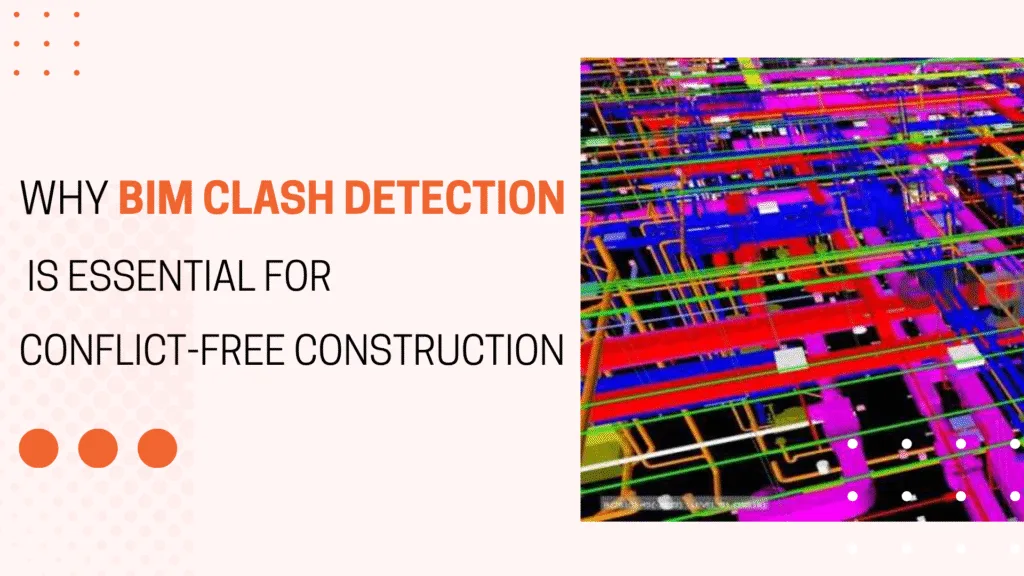
This scene is not rare in modern construction. Many projects in the USA face similar issues. The problem usually starts much earlier in the design phase. Small mistakes in drawings grow into major site conflicts. These conflicts lead to delays, rework, and budget loss.
This is where BIM clash detection changes the game. It helps teams find problems before they reach the site. It brings clarity to complex designs and keeps everyone aligned.
Today, construction is not just about building. It is about coordination, accuracy, and speed. BIM clash detection supports all three. It helps architects, engineers, and contractors work together without confusion.
This blog explains why BIM clash detection is essential for conflict-free construction and how it improves modern project delivery.
What is BIM Clash Detection?
BIM clash detection is a process used to identify conflicts in a digital building model before construction begins. It works inside a 3D environment where all building systems come together.
A clash happens when two elements interfere with each other. For example, a pipe passing through a wall or a duct overlapping a beam. These issues may look small in design but create major problems on-site.
Clash detection helps find these issues early. It checks architectural, structural, and MEP systems in one model. The software highlights the problem areas so teams can fix them before construction starts.
There are three main types of clashes:
- Hard clash: Physical overlap between elements
- Soft clash: Lack of required space or clearance
- Workflow clash: Scheduling or process conflict
Tools used for this process include Navisworks and other coordination platforms. These tools connect all project data into one model.
BIM clash detection brings control to complex construction projects. It reduces guesswork and improves decision-making. It also supports smoother teamwork across all disciplines.
Why Construction Projects Face Conflicts
Construction conflicts do not happen by chance. They come from broken coordination and outdated workflows.
One major reason is the separate working methods. Architects, engineers, and contractors often use different drawings. These drawings do not always match.
Another reason is late design updates. When one team changes a drawing, others may not see it immediately. This creates mismatched plans.
Complex building systems also increase conflict. Modern projects include structural, electrical, plumbing, and mechanical systems in tight spaces. Without proper coordination, clashes become unavoidable.
Communication gaps also play a big role. Teams may not share updates clearly. This leads to confusion on-site.
Manual checking methods add more risk. Human error can miss small but critical issues.
All these factors combine and create delays, cost overruns, and frustration at the construction site.
Read More: Top Challenges Considerations Before Starting a Scan to BIM ProjectKey Benefits of BIM Clash Detection
Early Identification of Design Issues
BIM clash detection finds problems before construction starts. This helps teams fix issues in the design stage itself. It prevents costly on-site changes.
Reduced Rework and Cost Savings
Rework is one of the biggest cost drivers in construction. Clash detection reduces rework by removing design errors early. This saves both time and money.
Improved Coordination Among Teams
All project teams work on one shared model. This improves communication between architects, engineers, and contractors. Everyone stays on the same page.
Faster Project Delivery
Fewer conflicts mean fewer delays. When issues are solved early, construction moves faster. This helps meet project deadlines.
Enhanced Project Quality
A conflict-free model leads to better execution. The final structure matches the design with high accuracy. This improves overall quality.
Read More: Why BIM is Essential for Construction Risk Management in 2026Types of Clash Detection in BIM
Clash detection works in different layers depending on project needs.
Hard Clash Detection
This identifies physical overlaps. For example, a duct passing through a beam. These clashes are critical and must be fixed before construction.
Soft Clash Detection
This focuses on spacing issues. Even if elements do not touch, they may not have enough clearance. This type ensures safety and usability.
4D Clash Detection
This includes time-based coordination. It checks how construction stages affect each other. It helps avoid scheduling conflicts.
Each type plays a role in improving project accuracy and reducing site problems.
BIM Clash Detection vs Traditional Methods
Traditional coordination depends on manual checking of 2D drawings. This method is slow and often misses hidden issues.
BIM clash detection uses a 3D model that combines all systems. It automatically identifies conflicts and highlights them.
| Feature | BIM Clash Detection | Traditional Method |
| Model Type | 3D integrated model | 2D drawings |
| Accuracy | High | Moderate |
| Error Detection | Automated | Manual |
| Speed | Fast | Slow |
| Coordination | Real-time | Separate files |
| Cost Impact | Lower rework | Higher rework |
The difference is clear. BIM reduces guesswork and improves project control.

Applications of BIM Clash Detection
BIM clash detection is used across many construction sectors.
In residential projects, it helps manage compact spaces and utility systems.
In commercial buildings, it supports large-scale coordination between multiple systems.
Industrial projects use it for complex machinery layouts and safety zones.
Infrastructure projects like bridges and highways also rely on clash detection for structural accuracy.
It is also useful in renovation projects where existing and new systems must align properly.
Challenges Solved by BIM Clash Detection
BIM clash detection solves many common construction problems:
- Design conflicts between disciplines
- Poor communication between teams
- Budget overruns due to rework
- Project delays caused by site issues
- Safety risks from incorrect installations
It brings clarity and control to every stage of the project.
How to Implement BIM Clash Detection Successfully
Successful implementation needs the right approach.
Use reliable BIM tools that support multi-discipline coordination. Ensure all teams follow the same modeling standards.
Regular coordination meetings help resolve issues quickly. Teams should review clash reports together and agree on solutions.
Skilled professionals play a key role. Experienced BIM experts can identify and fix issues faster.
A clear workflow also improves results. Each stage should have defined responsibilities and review points.
Why Choose Professional BIM Clash Detection Services
Professional services bring experience and precision. Experts understand complex project needs and deliver accurate results.
They use advanced tools and follow industry standards. This improves model quality and reduces errors.
Outsourcing also saves time. Internal teams can focus on design and planning instead of coordination issues.
Professional support ensures better project outcomes with fewer risks.
Conclusion
Construction projects today demand precision and teamwork. Even small design errors can lead to major site problems. BIM clash detection helps avoid these issues by identifying conflicts early.
It improves coordination, reduces costs, and ensures smoother project delivery. From design to execution, it brings every team on the same page.
As the industry moves toward digital workflows, clash detection will play an even bigger role in project success.
Modern firms now depend on advanced BIM services to stay competitive. Solutions like BIM service, Scan to BIM service, Architectural Modeling service, Structural Modeling service, MEP&F Modeling service, and Family Creation service help improve accuracy and coordination across all stages.
Whether it is for large infrastructure or detailed building design, BIM supports better decisions. It is equally valuable for architects and engineers who aim for precision in every project stage.
For teams looking to improve efficiency and reduce risk, adopting smart coordination methods is no longer optional. It is the new standard of construction excellence.
Next Synergy Solution continues to support this shift with expert BIM solutions that help deliver conflict-free, efficient, and high-quality projects across the USA.