
Introduction
A building renovation project begins in Chicago. The project team needs accurate drawings of the existing structure. However, the building is old, and the original plans no longer match the site. The contractor decides to use laser scanning to capture the real conditions.
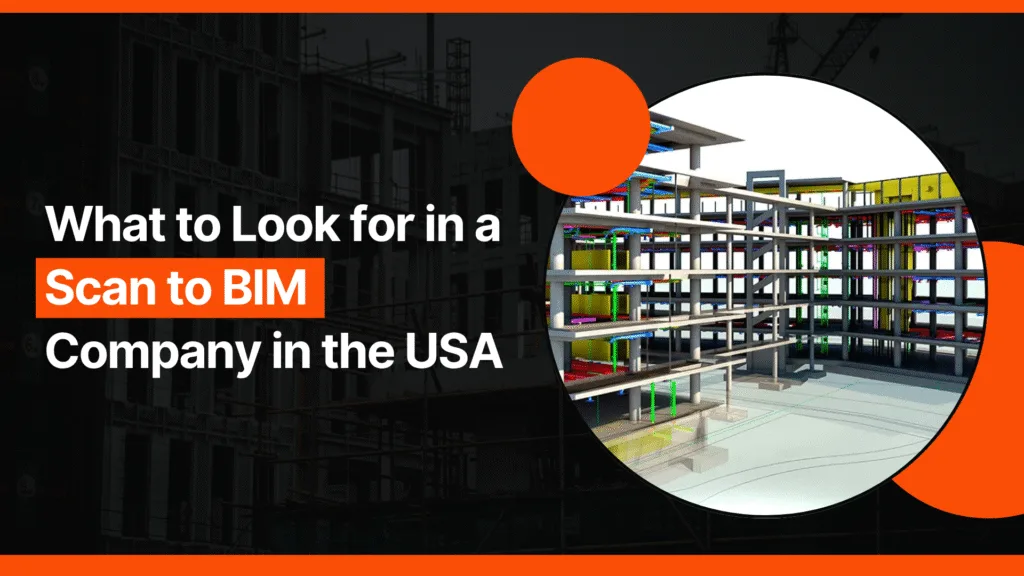
Soon, millions of data points from the scan arrive. The team now needs a precise BIM model from that data. This is where a Scan to BIM company becomes essential.
But choosing the right partner is not always easy. Many companies offer Scan to BIM services in the USA. Some focus only on modeling, while others understand construction workflows and project coordination.
A small mistake in modeling can lead to bigger problems during design or renovation. Walls may not align. MEP systems may clash. Project timelines may shift.
This is why construction firms, architects, and survey companies carefully select their Scan to BIM partners. The right company can turn raw scan data into reliable BIM models that support confident project decisions.
Understanding Scan to BIM Services
Scan to BIM is a process that converts laser scan data into a digital building model. Survey teams first capture the site with 3D laser scanners. These scanners record millions of data points that represent the exact shape of the building.
This data forms a point cloud. The point cloud shows walls, floors, ceilings, pipes, and structural elements. However, raw scan data alone is difficult to use for design or construction planning.
A Scan to BIM company converts this point cloud into a structured BIM model. Modelers recreate building elements such as walls, columns, beams, doors, and MEP systems inside BIM software. The result is an organized digital model that reflects the real conditions of the building.
Architects, engineers, and contractors use this model for renovation, retrofit, and facility upgrades. It helps teams understand the building before design work begins. Accurate Scan to BIM models reduce guesswork and allow project teams to plan with confidence.

Accuracy and Level of Detail (LOD)
Accuracy is one of the most important factors when choosing a Scan to BIM company in the USA. Construction teams rely on BIM models to make design and planning decisions. If the model does not match real site conditions, problems may appear later during construction or renovation.
Laser scanning captures precise measurements of a building. However, the quality of the final BIM model depends on how carefully modelers interpret that data. A reliable Scan to BIM company ensures that every element in the model reflects the scanned environment.
Another key factor is the Level of Detail (LOD) required for the project. LOD defines how much information and detail the BIM model contains. Different projects require different levels of modeling.
For example, early design planning may require a model with basic geometry and layout. Detailed construction coordination may need a more refined model with structural and MEP elements. An experienced team understands these requirements and delivers the correct level of detail.
Clear communication about accuracy standards and LOD expectations helps avoid confusion during project development. It also ensures that the BIM model supports design, coordination, and facility planning.
Experience in Point Cloud and BIM Modeling
Experience plays a major role when selecting the best BIM company in the USA. Laser scans capture millions of data points, but raw data alone does not deliver value. Skilled BIM modelers must interpret this data and convert it into accurate building elements.
An experienced team understands how to read point cloud data clearly. They can identify structural components, walls, ceilings, and mechanical systems even in complex spaces. Older buildings, renovation projects, and industrial facilities often contain irregular shapes and hidden details. These conditions require careful modeling.
For example, a renovation project in New York may involve a historic building. The structure may include uneven walls, outdated MEP systems, and structural changes made over time. A skilled modeling team can translate the scan data into a reliable BIM model that reflects these real conditions.
Experience also helps teams maintain modeling accuracy. Professionals know how to manage large datasets and create models that meet project requirements. They understand Level of Detail (LOD) standards and produce models that support design, coordination, and construction planning.
When companies lack this experience, the final model may contain missing elements or incorrect dimensions. These issues can affect design decisions and lead to delays later in the project.
Expertise in BIM Software and Tools
A reliable Scan to BIM company must also have strong expertise in BIM software and digital tools. Modern BIM workflows rely on specialized platforms that allow teams to process scan data and build accurate models.
Software such as Autodesk Revit plays a central role in Scan to BIM modeling. It allows modelers to convert point cloud data into structured building elements. Teams can create walls, structural systems, and MEP components that reflect real site conditions.
Point cloud processing tools also help manage large scan datasets. These tools allow teams to clean, organize, and align scan files before modeling begins. Proper data management ensures that the final BIM model remains accurate and easy to use.
In addition, experienced companies use clash detection and coordination tools to verify model quality. This step helps ensure that building elements align correctly and follow project standards.
Strong software expertise allows Scan to BIM teams to work efficiently and deliver reliable models. It also helps project stakeholders review designs, plan renovations, and make informed construction decisions with confidence.
Industry Experience and Project Portfolio
Industry experience is another key aspect to consider when selecting a Scan to BIM company. A company that has worked on different types of projects can better understand the needs of architects, contractors, and facility managers.
Construction projects vary widely in complexity. Residential buildings, hospitals, industrial facilities, and commercial offices each present unique challenges. A company with broad industry experience can adapt its modeling approach based on the project type.
Reviewing a company’s project portfolio can provide valuable insights. Previous projects show the scale of work they have handled and the level of modeling quality they deliver. Case studies may also highlight how their BIM models supported renovation, retrofit, or facility management tasks.
Experienced companies often have established workflows for handling point cloud data, maintaining model accuracy, and meeting project deadlines. This experience helps reduce risks and ensures smoother collaboration between project teams.
Quality Control and Model Validation
Quality control plays a key role in Scan to BIM projects. A BIM model must reflect the scanned building conditions with high accuracy. Without proper checks, small errors in the model can affect design and construction decisions.
Reliable Scan to BIM companies follow a structured quality control process. Modelers review the BIM model and compare it with the point cloud data. This step helps confirm that walls, columns, and structural elements match the scanned environment.
Teams also verify dimensions and alignment during this stage. If a modeling error appears, the team corrects it before final delivery. This process helps maintain confidence in the model.
Another important step is model validation. Project stakeholders may review the model to ensure it meets project requirements. Architects and engineers may check specific building systems before they begin design work.
Quality control also ensures the model follows project standards. These standards may include Level of Detail, naming conventions, and modeling guidelines. A well-validated model becomes a reliable reference for the entire project team.
Turnaround Time and Project Scalability
Construction projects often operate under tight schedules. Renovation and retrofit projects may require BIM models within a short timeframe. This is why turnaround time becomes an important factor when choosing a Scan to BIM company.
An experienced team can process point cloud data efficiently and deliver models on schedule. Clear workflows and skilled modelers help maintain both speed and accuracy.
Project scalability also matters. Some projects involve small buildings, while others include large commercial facilities or campuses. A capable Scan to BIM company should have the resources to manage projects of different sizes.
For example, a large healthcare facility may involve several floors and complex mechanical systems. Modeling such projects requires a coordinated team and strong data management processes.
Companies with scalable teams can adjust resources based on project needs. This flexibility helps them meet deadlines even when project scope grows.
Communication and Collaboration
Clear communication is essential for successful Scan to BIM projects. Multiple stakeholders often work together during a construction project. Architects, engineers, contractors, and survey teams all rely on accurate project information.
A reliable Scan to BIM company maintains open communication with these stakeholders. Regular updates help teams track modeling progress and address questions quickly.
Collaboration also improves the quality of the final model. Design teams may request specific details or adjustments during the modeling process. A responsive BIM partner can incorporate these requirements efficiently.
Many projects in the USA involve teams located in different regions or time zones. Strong communication practices help ensure smooth coordination across these teams.
When a Scan to BIM company supports active collaboration, the BIM model becomes a shared resource for everyone involved in the project.
Cost Transparency and Service Flexibility
Cost transparency is an important factor when choosing a Scan to BIM company in the USA. Construction projects often operate under strict budgets, so understanding the Scan-to-BIM cost becomes essential during the planning stage. Project managers need a clear breakdown of service pricing to evaluate the Scan-to-BIM cost before work begins and ensure it aligns with the project budget.
A reliable Scan to BIM company provides detailed pricing and clear project scope. This helps clients understand what the service includes. It may cover point cloud processing, BIM modeling, Level of Detail requirements, and model validation.
Transparent pricing also builds trust between the client and the service provider. When project expectations are clear, teams can avoid misunderstandings during the project.
Service flexibility is another important aspect. Each construction project has different requirements. Some projects may need basic modeling for design planning. Others may require detailed models for coordination and facility management.
A flexible Scan to BIM partner can adjust services based on project goals. This allows architects, contractors, and survey teams to receive models that match their exact needs.
Future of Scan to BIM in the USA Construction Industry
Digital construction continues to grow across the United States. Many firms now rely on data-driven workflows to improve project efficiency. Scan to BIM plays a major role in this transformation.
Laser scanning technology continues to improve. New scanners capture site conditions faster and with greater accuracy. As a result, construction teams can collect detailed building data in a short time.
BIM models created from this data help support renovation, retrofit, and facility management projects. Owners and contractors gain a clearer understanding of existing structures before design work begins.
As buildings become more complex, the demand for reliable digital models will increase. Scan to BIM will continue to support architects, engineers, and contractors who need accurate information for planning and coordination.
Conclusion
Choosing the right Scan to BIM company can make a significant difference in the success of a construction project. Accurate models help teams understand existing building conditions and plan renovations with confidence.
A strong Scan to BIM partner brings experience, technical expertise, and clear communication to every project. These qualities help ensure that point cloud data converts into reliable BIM models that support design and construction workflows.
Next Synergy Solution provides professional Scan to BIM services that help construction teams across the USA transform laser scan data into precise BIM models. With experienced modeling teams and efficient workflows, the company supports architects, contractors, and survey firms who need dependable digital building models for their projects.