
Imagine you walk onto your first big project site. You see crews with tape measures, clipboards, and piles of paper waiting for a call from the design team. Weeks go by, and suddenly there is a clash between the structural beams and the ductwork. You lose days fixing errors.
This kind of chaos is exactly why advanced BIM services are becoming a must in the USA. BIM is not just a tech term. It is a tool that helps you plan smarter, cut waste, and build better. In the United States, more than 80 % of large construction firms now use BIM in at least part of their workflow. This shows that the market truly believes in its value.
Understanding Advanced BIM Services
When we talk about advanced BIM services, we mean more than 3D models. You get tools that link design, schedule, cost, and performance data together. This helps you make decisions faster and with confidence. Advanced BIM includes scheduling (4D), cost planning (5D), sustainability checks (6D), and even digital twin data for facilities management. These tools move BIM from a drawing board into the heart of project planning and execution.
In the U.S., advanced BIM is not a niche anymore. Around 74% of contractors and about 70 % of architects use BIM workflows. You see it in big hospital builds, public infrastructure, and commercial developments where precision matters most.
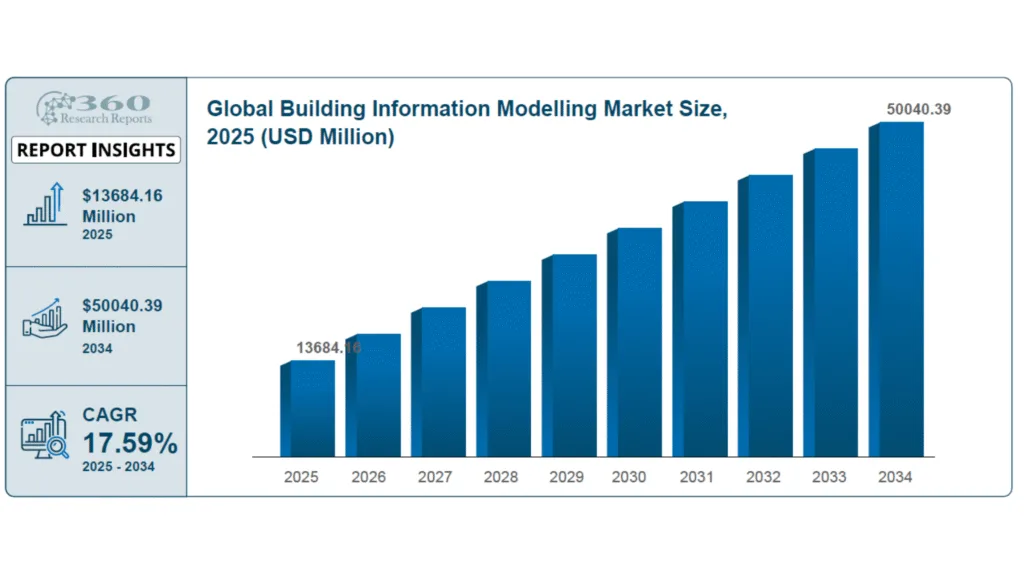
Using advanced BIM changes how you work every day. Instead of waiting for someone to spot a problem on site, the clash gets found in the model first. That saves time, money, and stress. Many major U.S. projects now include BIM from day one because it links all teams — architects, engineers, and builders – in one shared digital space.
Advanced BIM also helps when you choose materials or plan budgets. Cost planners can use model data to forecast budgets early and track costs as the design evolves. You lose fewer surprises and get more control over your numbers—supporting long-term BIM Market Growth.
Overall, advanced BIM turns scattered project info into one place you can trust. It boosts team work, cuts mistakes, and helps you deliver projects that run smoother and finish stronger.
Key Factors Driving the Rising Demand in the USA
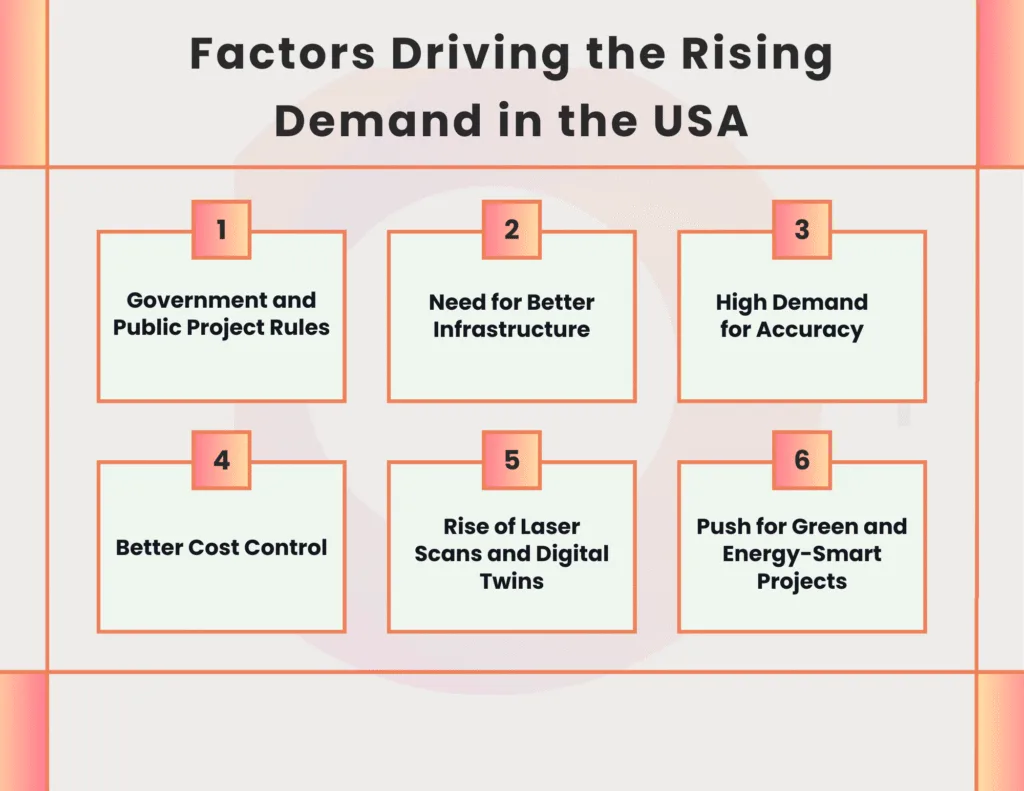
You may wonder why advanced BIM services see such fast growth in the USA. The reason is simple. You face tighter deadlines, higher material costs, and more complex project rules each year. BIM helps you cut confusion and work with more control. That is why more firms across the country push for it.
Government and Public Project Rules
Many U.S. states now expect digital project data for large public works. You see this trend in transport, airports, and health care projects. Agencies want better accuracy and fewer delays. BIM delivers that. When you use BIM, you show compliance faster and avoid long review loops.
Small case study: In 2006, the U.S. Army Corps of Engineers made BIM mandatory for many projects. Contractors had to submit BIM models during design and construction. This step helped the agency improve coordination, cut design errors, and speed up project reviews. It also set an early example for other public bodies across the USA to follow BIM-based delivery.
Need for Better Infrastructure
Many U.S. bridges, roads, and public buildings are old. Reports show that more than 40% of American roads need repair, and many bridges need upgrades. This creates pressure for faster and cleaner project planning. BIM helps you map real site conditions, sort out clashes, and speed up work. Teams avoid mistakes that slow down major repairs.
High Demand for Accuracy
Your projects now hold more mechanical systems, complex structures, and tight layouts. Manual checks cannot keep up. Contractors report up to 50% fewer errors when they use model-based tools. You save days that would go into rework. That alone pushes many firms to choose BIM.
Better Cost Control
Material prices in the U.S. shift more often now. You need tools that show cost impacts early. With 5D BIM, you track cost shifts as the model evolves. This helps you stay on budget. Many builders say they cut cost surprises by a large margin when they use BIM for estimates.
Rise of Laser Scans and Digital Twins
More U.S. firms adopt laser scanning for as-built checks. Scan data makes your model more exact. You avoid hidden issues in old sites. Digital twins also help owners track real-time building data after handover. This boosts demand from facility teams.
Push for Green and Energy-Smart Projects
U.S. clients want better energy performance. Many aim for LEED credits or lower utility bills. BIM helps you test energy use early and choose smarter options.

Industries Benefiting the Most From Advanced BIM Services
You see advanced BIM in many U.S. sectors now because each one deals with tight rules, heavy costs, and complex layouts. When you use BIM in these fields, you cut risk and move with more clarity.
Commercial and Residential Construction
You deal with fast deadlines, tenant needs, and strict codes. BIM helps you catch layout issues early. Many U.S. developers say they cut rework by up to 40% when they use model checks. You also show clients clear visuals, which helps with faster approvals.
Healthcare Projects
Hospitals hold dense systems and life-critical routes. Even a small clash can delay a large section. BIM helps you see problems early and keep the site safe. Many U.S. health networks now ask for BIM from day one because it gives them long-term facility data.
Industrial and Manufacturing Plants
You face tight space for pipes, ducts, and heavy machines. BIM gives you clear maps for each unit. It also helps you keep upgrades on track. Plant owners prefer BIM because it lowers downtime during a retrofit.
Transport and Infrastructure
Roads, rail, and airports need precise plans. Many U.S. transport agencies report faster reviews when BIM data is part of the proposal. With BIM, you also manage site hazards with more accuracy.
Public and Educational Buildings
Schools, civic centers, and government sites need long-term maintenance. BIM gives you asset data that owners trust. This helps them plan repairs or energy upgrades with much more clarity.
How Advanced BIM Services Improve Project Delivery
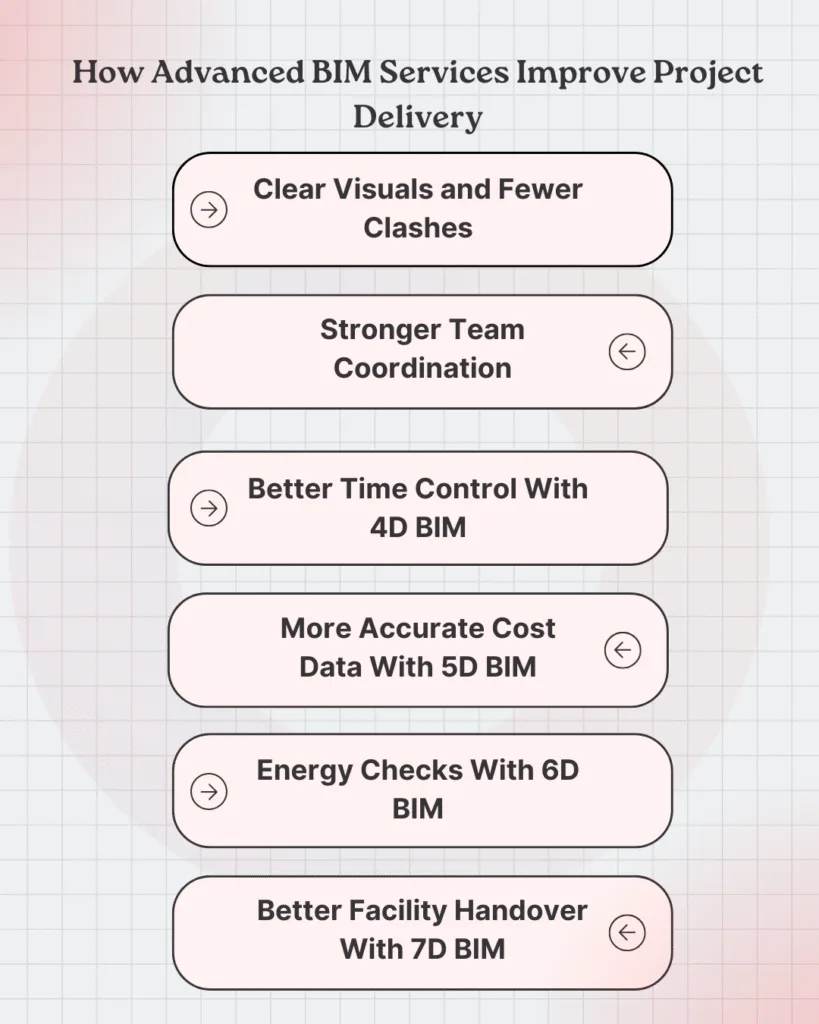
When you adopt advanced BIM services, your project flow gains real order. You cut mistakes early and avoid last-minute chaos.
Clear Visuals and Fewer Clashes
You see the whole project before you touch the site. Clash checks save you from duct or beam conflicts. Many U.S. builders report a sharp drop in field errors once they use 3D and 4D tools.
Stronger Team Coordination
Your teams stop working in silos. Everyone sees the same model. You avoid mixed notes or old drawings. This leads to faster decisions and less confusion on site.
Better Time Control With 4D BIM
You can link each task to the model. This gives you a clear timeline and lets you see delays before they hit you. Many firms say 4D BIM helps them cut schedule slips in large projects.
More Accurate Cost Data With 5D BIM
You see cost impacts as you shape the model. This helps you plan budgets with more care. You avoid late surprises when prices shift.
Energy Checks With 6D BIM
You can test daylight, HVAC loads, and energy goals early. This helps you reduce waste. Many U.S. owners ask for this because it supports green goals and saves long-term costs.
Better Facility Handover With 7D BIM
You hand over a data-rich model. The owner sees each asset, each part, and each past fix. This makes future repairs simple and quick.
Advanced BIM helps you deliver a project that looks cleaner, moves faster, and stays under control from start to end. It gives you a clear map for each phase and keeps your team aligned through the full journey.
Future of Advanced BIM Services in the USA
You stand at a point where digital tools shape every phase of construction. The USA moves fast toward data-heavy projects, and BIM sits at the center of this shift. You can see this in the rise of AI tools, cloud platforms, and real-time site sensors. Each tool feeds more value into BIM.
You will see more teams use AI to auto-check clashes, fix model errors, and predict cost risks. This helps you act before problems grow. Digital twins will also gain wider use. Many U.S. owners want live building data for energy, safety, and repair plans. This creates steady demand for BIM models that hold clean and rich asset info.
AR and VR tools will shape design reviews. You will walk inside a model before a single beam arrives. This helps teams build trust and make faster calls. Many U.S. tech reports show that firms with strong BIM use may cut delivery time by up to 30%. This gives you a real edge in a market with high pressure.
More public agencies push for digital project rules. You will see BIM requirements in bridges, airports, rail systems, and public schools. This shift will make BIM a base step, not an upgrade. With tighter safety laws and more complex systems, advanced BIM becomes a must for anyone who wants to stay ahead.
As the workforce grows younger, digital comfort grows too. New AEC staff expect tools that work fast and clean. They accept BIM as a normal part of the job. This helps you move to full digital adoption with less pushback.
The future is simple: if you want speed, clarity, and control, BIM will sit at the core of your process.
Conclusion
You face more pressure today than ever. Costs rise fast. Schedules shrink. Sites grow more complex. Advanced BIM gives you a clear way to deal with all of it. You see problems early. You plan with real data. You guide your teams with one shared source of truth.
Each section of the industry moves toward digital tools because the benefits show up in daily work. You save time. You avoid waste. You keep your client informed with clear visuals. You hand over a project that stays useful long after your crew leaves the site.
The rise of advanced BIM in the USA is not a trend. It is a shift in how you plan, build, and maintain every type of project. When you use it well, you deliver stronger results and stay ready for the next wave of innovation.