
Imagine standing inside an old building and wanting to create its exact digital copy. You can see every beam, pipe, and wall, but turning that into accurate data is the real challenge. This is where the Scan to BIM service changes the game.
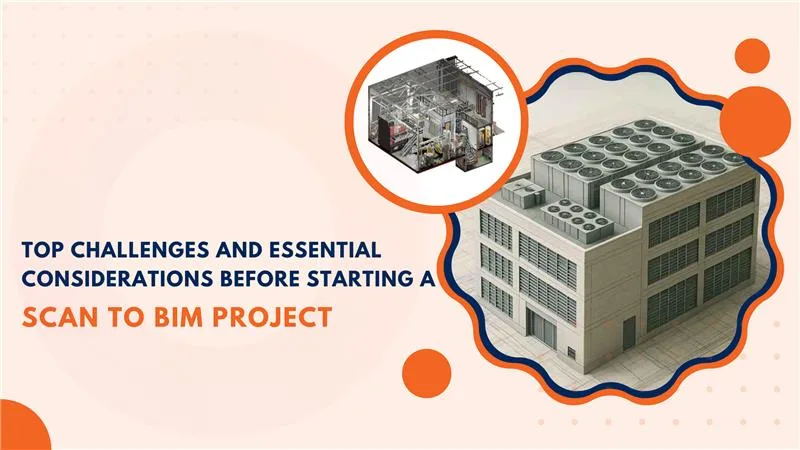
As someone in construction or architecture, you already know how errors at the start can delay everything later. Traditional 2D drawings often miss tiny but important details. With Scan to BIM, you get a complete digital version of your site before work begins. It gives your team one reliable source of truth.
Many firms now rely on this method to plan renovations, manage assets, and coordinate better with on-site teams. It reduces guesswork and helps everyone make decisions based on real data. But before you jump in, you need to understand what this process involves and what makes it valuable.
The goal is simple – to move from guesswork to clarity. Once you understand how Scan to BIM works, you’ll see why it’s becoming essential for modern projects. Let’s break down the process step by step.
Understanding the Scan to BIM Process
If you’ve ever wondered what is Scan to BIM, it’s the process of turning real-world buildings into accurate digital models using 3D scanning technology.
Every Scan to BIM project starts on-site. A technician uses a 3D laser scanner to capture every visible element of a building. These scanners send out laser beams that measure distance and record millions of points. Each point represents a tiny part of the surface, forming what’s called a point cloud.
Once the scan is complete, this point cloud is processed on a computer. The data is cleaned, aligned, and combined to create one accurate 3D model. At this stage, you can rotate, zoom, and explore every detail of the structure.
Next comes modeling in BIM software like Revit. Here, the digital points turn into smart building elements – walls, doors, windows, ducts, and beams. Each element carries real-world data, such as size, location, and material. This is what makes BIM more than a visual model. It’s a database of your project.
After the model is built, it’s verified for accuracy. Teams compare the BIM model with the actual scan to ensure everything matches. Once confirmed, you have a precise digital twin that’s ready for design, planning, or renovation.
With this process, you can detect errors early, plan better, and reduce site visits. You gain full control over information, which saves time and cost. Understanding this foundation helps you see why Scan to BIM isn’t just a tool – it’s a smarter way to build.
Major Challenges Before Adopting Scan to BIM
Adopting Scan to BIM sounds easy on paper, but when you begin, several challenges appear. Each project comes with unique conditions, data types, and technical limits. Understanding these early helps you avoid costly mistakes later.
Let’s look at some of the most common challenges firms face.
Inaccurate or Incomplete Scans
Everything starts with scanning, so if that goes wrong, the whole model suffers. Shadows, tight corners, or reflective surfaces can distort the laser readings. Missing even a small section can lead to major design errors. To avoid this, skilled operators and proper scanning setups are crucial.
Handling Massive Point Cloud Data
A single scan can create gigabytes of data. Managing, transferring, and processing these files can slow down systems. Many teams underestimate how heavy this data can be. Without strong hardware or cloud support, it can delay modeling and coordination work.
Lack of Skilled BIM Modelers
Not every BIM modeler understands point cloud conversion. The task needs both technical skill and real construction knowledge. Many firms struggle to find modelers who can balance accuracy with efficiency. This skill gap often affects timelines and output quality.
Defining the Right Level of Detail (LOD)
Choosing the correct LOD can be tricky. Too low, and your model lacks critical details. Too high, and you waste time modeling unnecessary elements. Each project needs a balanced approach depending on its end use – whether it’s for renovation, facility management, or construction.
Coordination Between Teams
Scan to BIM involves multiple teams – surveyors, engineers, architects, and contractors. When communication breaks down, data gets lost or misinterpreted. Without a shared workflow, revisions can pile up and delay delivery.
Read More : Top Reasons General Contractors Can’t Ignore BIMCost and Time Estimation
Scan to BIM offers great long-term value, but the upfront cost can be higher than expected. The hardware, skilled manpower, and processing tools all add up. Without a clear plan, you may overshoot budgets or extend timelines.
Data Accuracy and Quality Control
Even with advanced tools, small alignment errors can occur. If quality checks are skipped, the model may not match the real site. This can lead to conflicts in later project stages. Proper QA at every step ensures your final BIM model is dependable.
Key Considerations Before Adopting Scan to BIM
Before you decide to invest in Scan to BIM, you need a clear roadmap. It’s not just about buying a scanner or hiring a BIM team. It’s about understanding what you truly need from the process. Here are the key points to consider before getting started.
Define the Purpose of the Model
Every project has a goal – renovation, documentation, or facility management. Your purpose decides the accuracy and LOD required. Without clarity, your team may waste time modeling unnecessary details. Always define the end use before scanning begins.
Choose the Right Technology Stack
Different scanners and BIM tools deliver different results. The choice depends on your project scale and accuracy expectations. Ensure your hardware and software are compatible, so data flows smoothly from capture to modeling.
Evaluate Your Team’s Skill Level
Scan to BIM requires experienced professionals at every step – from scanning to modeling and QA. If your in-house team lacks this expertise, consider outsourcing to specialists. Skilled technicians can save you both time and rework.
Set Clear Project Standards
Standards keep everyone aligned. Decide file formats, naming conventions, and LOD expectations before work starts. This makes collaboration between different teams smoother and avoids confusion later.
Focus on Quality Control
A single unchecked error can ripple through the entire model. Plan multiple QA stages – one after scanning, one after modeling, and one before delivery. Continuous checking ensures your model stays accurate and ready for construction use.
Plan for Data Management
Large point clouds need powerful systems and organized storage. Make sure your setup can handle big files without slowing down. Cloud-based collaboration tools can make sharing easier and more secure across teams.
Consider Long-Term Usability
Your BIM model isn’t just for one phase. It can support operations, maintenance, and future upgrades. Build it with longevity in mind, using data formats and details that stay useful over time.
Choose the Right Partner
If you’re new to this process, working with an experienced BIM partner can make a big difference. A skilled team understands the challenges, tools, and coordination needed to deliver reliable results.
Read More : How to Choose the Right BIM Services ProviderWhen these factors are in place, your Scan to BIM adoption becomes smoother and more predictable. You reduce risks, save costs, and get data you can trust.
How Next Synergy Solution Simplifies Scan to BIM Adoption
When you think about adopting Scan to BIM, the first question is usually, “Where do I even start?” The technology sounds complex, and the process involves multiple stages – scanning, data cleaning, modeling, and quality control. That’s where Next Synergy Solution makes things easier.
Our team brings years of experience in handling projects that demand precision and speed. From large commercial buildings to detailed MEP modeling, we’ve worked on real projects that required accuracy down to the smallest detail. We don’t just convert point clouds – we turn them into reliable, usable data that your team can build upon.
Next Synergy Solution follows a structured approach. Every project begins with understanding your goals. Whether you want LOD 300 models for design coordination or detailed LOD 500 models for facility management, we tailor the workflow to match your needs. This focus ensures that you get exactly what your project demands – no over-modeling, no unnecessary cost.
With Next Synergy Solution, you’re not just outsourcing a service; you’re gaining a partner who understands both the technology and the construction realities behind it.
Conclusion
The move toward Scan to BIM is more than just a technology upgrade. It’s a mindset shift – from reactive problem-solving to proactive planning. It gives your team the power to see, analyze, and act before anything happens on-site.
Yes, the process has challenges. It demands the right tools, training, and expertise. But with careful planning and a reliable partner like Next Synergy Solution, these challenges turn into opportunities. You gain accuracy, save time, and reduce costly surprises during construction.
In the end, success with Scan to BIM depends on trust – trust in your data, your team, and your partner. With experience, precision, and commitment, Next Synergy Solution helps you build that trust, one project at a time.